

Thanks to everyone who helped us ring in the New Year at Write the World! Our January Album...
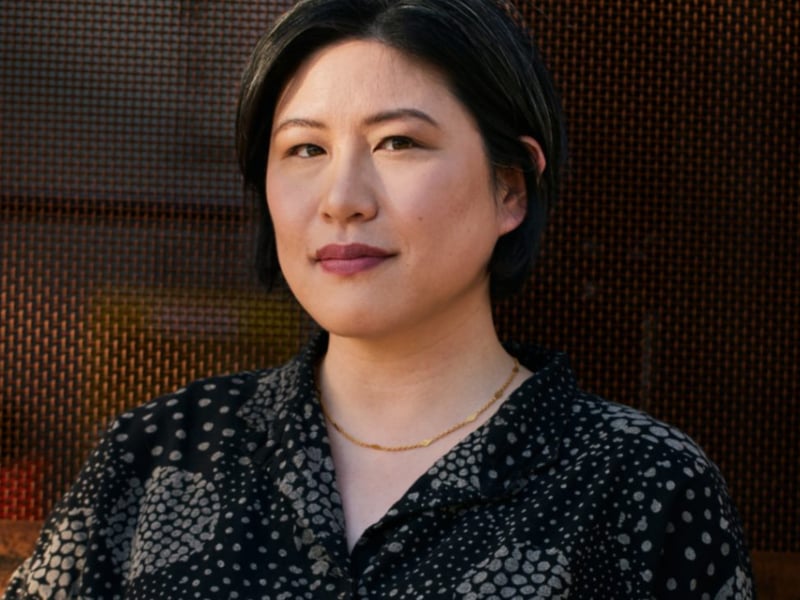
Want to know what the Guest Judge of our Fantasy Competition is looking for in a winning entry this July 2026? Susanna Kwan, author of Awake in the Floating City, winner of the Asian Pacific American Award for Literature and a finalist for the PEN/Hemingway Award and the Climate Fiction Prize, shared her expert advice on crafting a whimsical, fantastical tale.
"To me, ordinary people (including fictional ones) are fascinating and carry vast worlds inside of them, if only we have the patience to sit with them and ask them to share," she said, and we couldn't agree more.
Your debut novel, Awake in the Floating City, which takes place in a flooded, near-future San Francisco, has been a finalist for several notable awards and has won others. Environmental justice matters a lot to the young writers on our site, as they grapple with unique changes and disruptions in their home countries. What advice do you have for them on writing effectively across genres from a climate-oriented perspective?
Wherever you are, cultivate your attention. Start with where you live: home, neighborhood, school, land. What ecosystems are you part of? Notice human and non-human forms of life. How does life grow, struggle, survive, and thrive in the places you already know well? Do research to find out more about how and why those conditions exist. Go to the library. Talk to people who remember what a place was like before you were there. Regardless of genre, let your growing understanding of place inform your writing.
Oftentimes, the fantasy genre can feel vast and even overwhelming, with sprawling casts of characters and complex new worlds. In contrast, Awake in the Floating City offers intimate character studies of two women, Mia and Bo. In your experience, what was the advantage of focusing on their quiet, daily lives rather than the speculative complications of their world?
Life on Earth is a strange wonder, and there are infinite ways to write about it, from epic tales set across multiple galaxies to stories that take place in a single minute. Speculative fiction is spacious and has room for all of it. In my novel, the constraint of two people in a room for a year gave me a simple structure onto which I could then layer many other real and imaginary elements, including places, memories, and events all the way from geological history to an imagined future. To me, ordinary people (including fictional ones) are fascinating and carry vast worlds inside of them, if only we have the patience to sit with them and ask them to share.
Your creative practice is interdisciplinary, as you are not only a writer but also an artist. Your whimsical “Kwanimals” depict figures in a variety of situations, some playful, others a little eerie. What have you learned about balancing the strange and the relatable when designing such fantastical characters as these?
What a delightful question! My creative process for visual art, as well as writing, is largely intuitive. I sit down, pick up my pen, and wait to see what shows up on the page. Often I’m searching for an emotional resonance, the exact expression of some specific and baffling aspect of living, whether that’s the giddiness of reading, delighting in a giant beverage when you already have to pee, or pretending you’re fine when you really, really aren’t. One of my favorite discoveries is that the characters in this series can light up the imaginations of people of all ages, including non-verbal children and nonagenarians nearing end of life. As an artist, I am always trying to say to another person: Look at these feelings we feel. Isn’t it funny, scary, wonderful, and strange?
Fantasy is an ancient form of storytelling, alive in every myth and folktale. Especially when times become difficult, humans tend to turn to the magical depths of our imaginations. What do you find most enchanting about the genre, and why do you think it’s important to keep writing within it?
I’m drawn to how forms of otherworldly storytelling can capture the absurdity, horror, and beauty of lived experience in a way that realism cannot. There’s room for the writer and the reader to explore the periphery and interstices of the known world, and to go deeper into and beyond it. We make up stories to engage the imagination, play with time and space, imagine other ways of being, and sit with life’s greatest mysteries.
What are you looking for in a winning entry? Do you have any other advice for the writers, especially those who are new to writing fantasy?
I’m looking for a story that surprises me and makes me pay closer attention to this world by showing me another one. And language that feels alive!