
Fantasy is a form of speculative fiction involving magic, adventure, imaginary creatures, and supernatural forces. Setting is essential to the genre, which explores uncanny geographies, constructs languages, governments, and belief systems, and establishes riveting lore. In short, world-building is a pillar of fantasy.
The environment where a magical story unfolds is always directly relevant to the characters, whose interactions with their surroundings define the plot. But a world’s nature can vary: Some fantastical realms are entirely fabricated, while others are grounded in our reality or exist through a magical portal.
Crucially, setting is also how we distinguish the two primary types of fantasy: high fantasy and low fantasy. Their differences lie in whether the story is set on Earth or beyond it.
High Fantasy
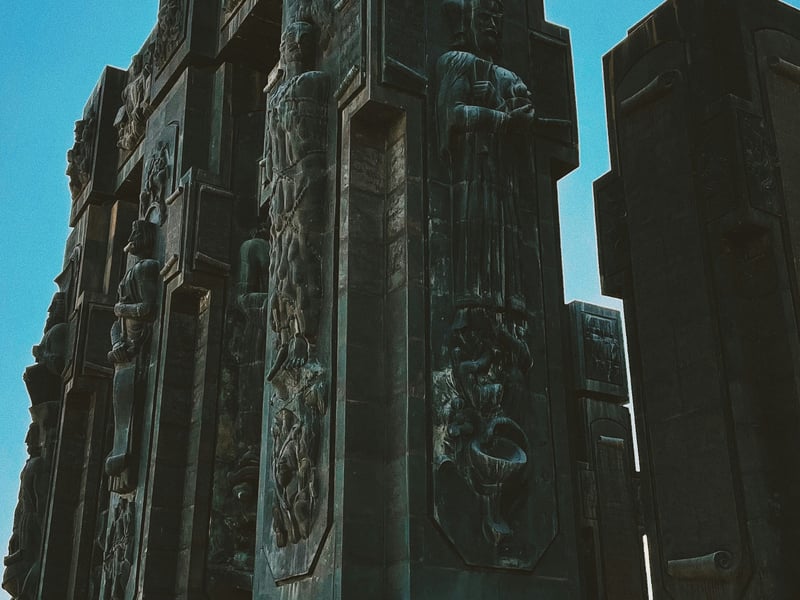
High fantasy is as thrilling to read as it is difficult to write. The story develops in a fictional, alternative realm (i.e., “secondary world”) independent from our world, which is governed by its own set of rules. These environments are often inspired by elements of Western mythology, including the concept of the "hero's journey,” the conflict of good vs. evil, enchanted items, divine intervention, personification of the natural world, character archetypes, and supernatural creatures (dwarves, elves, fairies, mermaids, dragons, witches, etc.)
The author must iron out every detail to ensure consistency and persuade the reader that the world is real, as imagined as it may be. For example, you might ask yourself:
- What would it smell like to take a walk through this world?
- How is magic learned, inherited, or practiced?
- What food do dwellers of this world consume?
- What does this world’s language sound like?
- How does the government operate, and what laws drive its power?
- What is the world’s history?
- What is the terrain and geography like? (You might need to develop a map.)
- How are magical individuals treated in this world?
High fantasy, hence, requires extensive world-building (to support this planning, you might try this questionnaire by The Darling Axe).
Examples of High Fantasy Books
- The Hobbit and The Lord of the Rings by J.R.R. Tolkien
- Earthsea by Ursula K. Le Guin
- A Song of Ice and Fire by George R.R. Martin
Low Fantasy
Unlike high fantasy, a story is identified as low or intrusive fantasy when supernatural phenomena intrude on an otherwise normal Earth (i.e., “primary world”). While the former is completely driven by imagination and evokes a unique reality, the latter is defined by the presence of fantastical elements in our familiar world. The environment itself is based on reality and mimics the physical, social, and logistical laws of Earth, but its fantastical dimension comes from the fact that magic is introduced into that setting.
In low fantasy, magic is considered rare, intrusive, or inaccessible to the majority. Sometimes, that magic exists as a world within a world, i.e., the magical realm exists inside of Earth, often in secret. Other times, the storyteller might weave magic into the fabric of the familiar, everyday world.
To write low fantasy, you might consider:
- Quotidian familiarity: The story represents our world’s day-to-day.
- Environmental realism: The natural world is accurate to Earth’s composition.
- Limitations on magic: Magic as a system must be cleanly defined. What are its limitations? Who can practice it, and who can’t? Is it a secret? What is its history?
Examples of Low Fantasy Books
- Harry Potter by J.K. Rowling
- Kiki's Delivery Service by Eiko Kadono
- Twilight by Stephenie Meyer
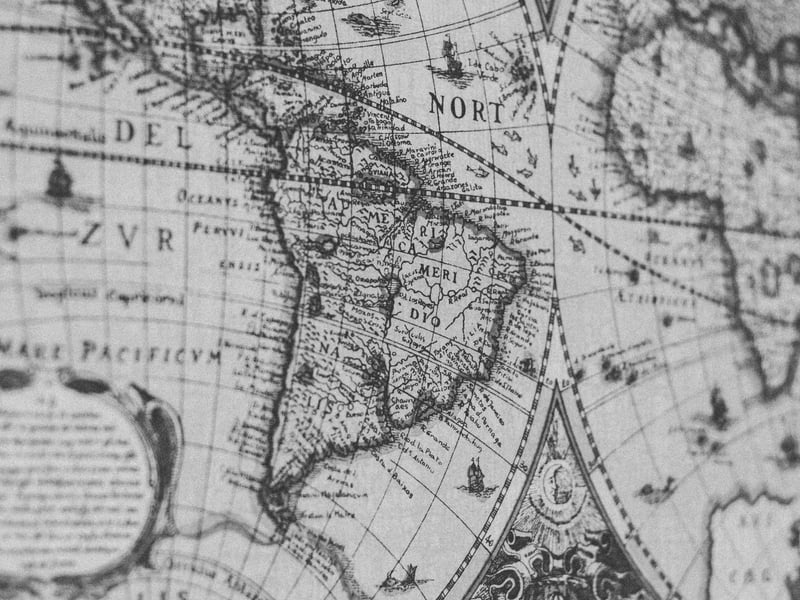
“Portal” Fantasy: High or Low?
Portal fantasy is a type of fantasy in which characters are transported from Earth to a magical realm where the story unfolds. Here, the characters from our familiar Earth are exposed to an unfamiliar realm that possesses its own rules, systems, history, and culture governed by fantastical traits. An example of portal fantasy would be The Chronicles of Narnia by C.S. Lewis.
So, would we call this high fantasy or low fantasy?
Most would agree that portal fantasy would still be a form of low fantasy since the story still assumes Earth’s existence and hence the story unfolding in the magical realm still occurs in relation to our own world. However, one could make the case that low fantasy must occur within the bounds of our planet and its physical and social laws; exploring beyond that would disqualify the subgenre as intrusive.
Do you love writing fantasy? Teenagers around the world are invited to enter our Fantasy Competition before Monday, July 27th, for the chance to win $100, gifts from Blackwing, and recognition across our platforms. We're also running a Sci-Fi & Fantasy Camp from July 13-17 or August 3-7!
About the Author
Tula Jiménez Singer is the Marketing and Administrative Coordinator at Write the World. She graduated from Northeastern University with a Bachelor of Science in Linguistics in 2025, where she focused on Cuban Spanish discourse and dialectology. Before Write the World, she worked in marketing and journalism at various organizations, including The Boston Globe and The Climate Justice and Sustainability Hub. She also served as President of Artistry Magazine, a university publication exploring global arts and culture. Writing is her greatest passion: she joined Write the World as a young writer in 2019 while living in Havana, Cuba, and continues to write stories about magical realism, Cubanism, culture, and identity.