
A deeply vulnerable, introspective, and intimate form of writing, the personal essay invites you to look inward before expressing your story through narrative...easier said than done. That's why we had the pleasure of interviewing the extraordinary journalist Andy Trincia to impart to you his expert advice in personal essay writing!
Pay careful attention to his insights: Andy Trincia is serving as the Guest Judge for our Personal Essay Competition for teenagers, open through Monday, June 22nd.
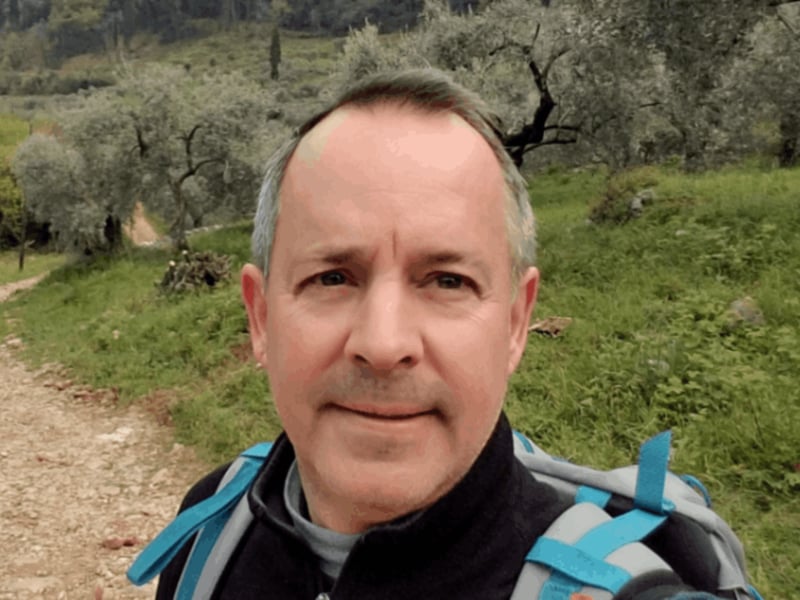
Write the World is a widespread community with young writers from over 125 countries. You’ve personally visited nearly 60 countries, across five continents, publishing writing and photography throughout your travels. With your perspective and experience, what types of stories tend to be most memorable or surprising for you?
I love stories from foreign countries and cultures because they’re often eye-opening and fascinating, but tales closer to home can be just as compelling. Personal essays are just that – deeply personal and take courage – and the most memorable ones read like novels, with characters and gripping details, but constantly reminding the reader that it really happened. Often, these are life-altering experiences that are full of surprises. That’s why narrative nonfiction is my favorite genre, including in the shorter form of personal essays.
You have an audience for your travel writing on Substack where you document your life in Romania, often examining the day-to-day in a way that gives the reader a holistic sense of place. How do you choose what you want to write about, and how do you turn what might seem mundane into a compelling story?
I try to keep a pipeline of ideas for my Substack essays, though I don’t always stick to it. In the seven months since I started, I’ve been writing weekly posts, and sometimes it’s just something that happens during the course of the week that triggers me. I’ve included travels and real-time life events, including losing a sibling, and I enjoy delving into cross-cultural interactions. On the latter, even a mundane errand such as a blood test can become a story – especially when it’s told through the lens of a foreigner/immigrant/expat – that resonates with someone in a cubicle in Boston, Munich, Singapore or Nairobi. I’m finding that people are curious about Romania, a largely undiscovered and misunderstood country. I love introducing it to readers, showcasing its beauty, history and intrigue, but not shying away from the tough realities.
The personal essay has several popular sub-genres—memoir, food-writing, ethnographies, and, of course, travel writing. With all of these sub-genres (and more!) huddled under the personal essay umbrella, what do you think exists at the core of every personal essay?
Every personal essay should have a core theme, usually with a protagonist – the writer – and some kind of experience, whether it be a discovery or revelation, self-transformation or overcoming a challenge, vulnerability or confrontation. It can be major or minor and still have impact. These stories should come from the heart and leave the reader with a take-away, perhaps a life lesson, key message or tangible insights.
You’ve worked as both a journalist, which requires grounded, objective research, and as a travel writer, which may incorporate a more subjective narrative. As young writers prepare for this competition, how can they balance details and specificity with reflection and introspection?
Yes, the journalist in me is still obsessed with details and fact-checking. I spend a lot of time on this, whether it’s a newspaper or magazine article or my Substack columns. Indeed, it’s a balancing act in personal essay writing. Details and the “color” are the way to draw in readers and keep them interested. I see details and specificity as mile markers of sorts, helping with the flow, as readers meander down the road or river with you. It’s these very details – fond recollections, personal tragedies, travels, songs and other snapshots in time – that jog your memory, help you weave the story and set up a human moment to which the reader can relate.
What are you looking for in a winning entry? Do you have any other advice for the writers, especially those who are new to writing personal essays?
Just as in journalistic stories, I love a good “lede” – that opening paragraph that captivates. It’s important to craft that carefully. My advice is to write about a topic in which you have interest or compassion. Use strong verbs and vivid details. Be honest, be self-deprecating, add humor if appropriate, and avoid unneeded repetition. Focus on the arc of the story, that is, the structure or chronology with a beginning, middle and end. Sounds easy but it’s so important. Just write! Write straight through and then go back and rework, revise and polish. If you hit “writer’s block,” it’s fine to take a break. It happens to all of us.
In this age of audio-visual over-stimulation, I’m just happy to see young people interested in the written word. In my view, they’re winners just for entering this competition.