
Writing environmental journalism requires you to confront a massive problem—climate change—and...
Want to make your op-ed truly stand out? Guest Judge of our Op-Ed Writing Competition and acclaimed journalist Aymann Ismail shares expert advice on crafting powerful, personal, and persuasive opinion pieces. Read our interview to learn tips that can help any writer strengthen their voice.
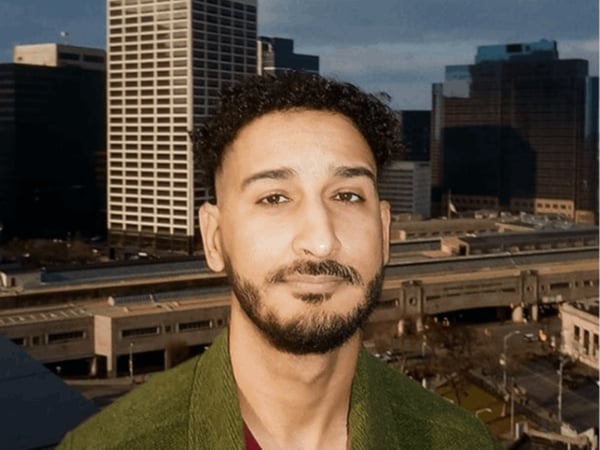
You’re a journalist, podcaster, video editor, essayist, and book author — to name a few! All of your work seems to be connected by a commitment to vulnerability from yourself and others. What brings you back, time and again, to that space of the deeply personal?
Honestly, every project starts with something annoying me. I’m reading something or watching coverage and thinking, this is technically fine, but it feels flattened into talking points or “sides." So instead of jumping in with my own take (which I think we’re all being trained to do now), I try to slow down and ask: what's actually happening here? What's missing? What side of this story am I uniquely equipped to tell? The work ends up feeling personal because I’m not hiding that process. I’m bringing the reader with me as I try to figure it out in real time. Sometimes that means the piece wanders a bit. Sometimes it ends without a clean conclusion. But I'm personally not a fan when things feel squeezed into a neat ending anyways. To me, a good piece trusts the reader enough to be drowned in context, not deprived of it.
Your series in Slate magazine, “Who’s Afraid of Aymann Ismail?,” confronts fears about Muslims. Being Muslim yourself, how do you find the courage to place yourself at the center of such heated subjects? And why do you believe it is important to try to understand people with vastly different — and often hateful — viewpoints?
I don’t know if I’d call it courage. Most of the time it feels more like, well, I’m already in this whether I like it or not. Islamophobia isn’t something I read about online. It’s something I bump into constantly, something I worry about when I’m out with my kids, something that informs how people approach me before I’ve said a word. That series came from being frustrated with how abstract those conversations had become. We talk about fear of Muslims like it’s an opinion floating in the air, not something rooted in actual encounters and incentives and misunderstandings. The hope with talking to people with views I find upsetting is to force it out into the correct context, because it's so much easier to say awful things about a group of people if they're not in the room. Also, if journalists writing about Islamophobia aren't looking closely at how fear of Muslims is formed (and rewarded), we're not really doing journalism so much as we’re just reacting to it.
Congratulations on publishing your memoir about becoming a father, Becoming Baba. Have you found that writing about personal experiences helps to inform your opinion writing? How so?
Writing Becoming Baba really messed with me, but in a good way. Parenting, I learned pretty much instantly, is just a neverending test of your tolerance for uncertainty. Stopping to write about it, however, forces you to confront how much of your thinking is provisional. You have to verbalize how you feel, and try and see yourself at a time when you can't even hear yourself think over the constant crying and emergencies. I can't tell you how often I found myself contradicting myself when writing that first draft. It made me realize how little control I actually have. How it's bled into my opinion writing? I don't really know. I guess I’m less interested in sounding definitive and more interested in being transparent about how I got somewhere. I don’t want readers to think, here’s the answer. I want them to think, oh, I recognize that feeling of trying to make sense of something bigger. Or at least that's how I'd like it to have bled into my writing at Slate, lol.
As president of the Arab and Middle Eastern Journalists Association, you work with journalists across many media organizations. What advice do you give to writers who want to responsibly express their opinions on complex, sensitive issues without oversimplifying opposing viewpoints?
I became president of the Arab and Middle Eastern Journalists Association (AMEJA), last year during a moment of real grief and vulnerability. Journalists who look like us, with names and faces like ours, were being killed in Gaza by the hundreds, and the coverage of that conflict in our own newsrooms, to many of us, felt gut-wrenching, haunting, intolerable. I put together a survey of our members and what came back was heavy. People felt more unsafe, held to higher standards of neutrality, pressured to self-censor, and largely unsupported. So the advice I give now is shaped by that reality. Be rigorous. Do the reporting. Be specific and confident. Never erase yourself to make others comfortable. But also be honest about what you don’t know yet. Certainty is tempting (especially online) but it’s rarely that easy. Responsible writing isn’t about pretending you’re unaffected or "unbiased," whatever that means. It's about getting it right, perfecting your craft, and doing the work.
What are you looking for in a winning entry? Any other advice for the writers, especially those who are new to writing op-eds?
I’m drawn to pieces where I can feel the writer thinking. I want to know why this question won’t leave them alone. For newer writers, I’d say: don’t chase the hot take. Start with the thing that’s genuinely bothering you, the thing you keep turning over in your head. Let the piece be a record of that struggle. If you end up with more complexity than closure, that’s often the most honest outcome. And of course: JUST START WRITING AND WORRY ABOUT THE SYNTAX LATER!