
"I often find that emotional truth is the most valuable part of a memoir, and really, any form of fiction," said our Memoir Competition winner, Mona James.
Congratulations to the winning memoirists, selected by Guest Judge Dr. Tasha Faruqui! We had the chance to interview them in this exclusive, behind-the-scenes Q&A to get to know a little more about the writing process behind their victorious entries, plus gain some insightful tips to pass on to our teenage writing community.
P.S. Check out Dr. Faruqui's commentary on the winning pieces here.
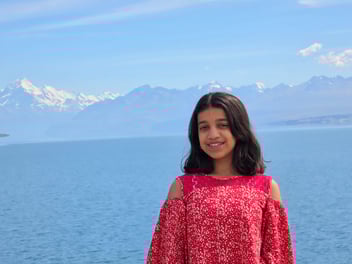
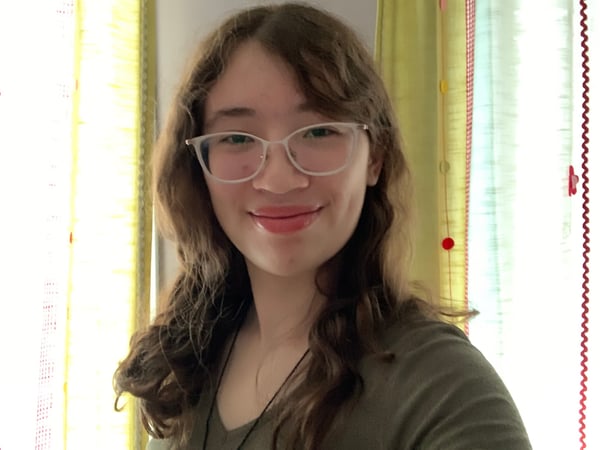
Winner: Mona James, age 17, Canada
Read the winning piece here!
Described by Guest Judge Tasha Faruqui as a "beautifully crafted" and "powerful and memorable read," what inspired you to write the winning piece?
The inspiration for my piece mainly came from my school’s creative writing class, where we had a creative non-fiction unit. From this, I wrote my first memoir. Additionally, at the time, I had been reading Stephen King’s memoir “On Writing” and found his ability to carry the reader through his life and writing nothing short of inspiring. It was from this that I got the idea for my memoir—how my own identity formation impacts my writing. The truth, I think every writer knows, is that writing and identity are closely intertwined. The things that you experience and notice are things you often write about. As such, I had wanted to try my hand at an identity and writing-related memoir—how my experiences shaped my development as a writer and imagination. Thus, “The Man I Once Knew” was born.
Throughout your memoir you delicately weave in dialogue, bringing the story to life. How does a memoirist balance truth with recreating such precise details?
I often find that emotional truth is the most valuable part of a memoir, and really, any form of fiction. However, memory is a fragile thing, and I cannot say for certain whether the dialogue I wrote was accurate word for word; in fact, I doubt it is. There is bound to be something forgotten and something misremembered. That said, the emotional truth behind it was true. When writing a memoir, it’s important to recall the moments that compose your life and find meaning in them, whether they are small or large. The emotions you felt, the sensory details, the blurriness or the clarity of the moment. All of that contributes to the truth as you know it. From this, I wanted to try to re-create those raw feelings and memories through my writing, using symbolism, atmosphere and dialogue to convey how I had felt based on the limited things I could remember.
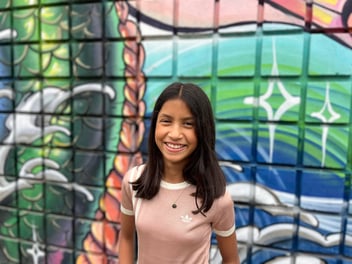
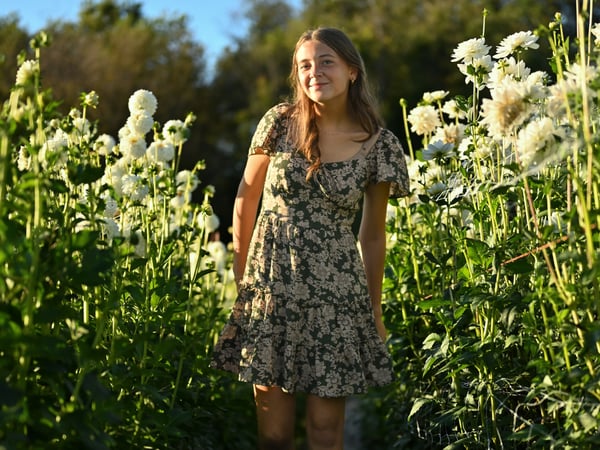
Runner-Up: Mikayla Gordon, age 18, US
Read the runner-up piece here!
Throughout your piece, you reference "darkness," setting the mood against the backdrop of the mother's desperation. How was this detail an important element in your narrative?
The darkness I wrote about was both literal and symbolic. So many nights of moving were spent in the dark, which, as a kid still scared me. I never knew what lurked around the corner or what monsters I made up in my head were real. That darkness was real, and it brought to life just how young I was, how I was still a kid. Symbolically, the darkness represented the unknown and hopelessness I felt. The path ahead was unclear, dark, and scary. While both of those remained true in my child mind, the desperation of my mother and the choice of perseverance showed that the darkness had to end.
What advice do you have for memoirists out there seeking to craft their own story?
The biggest thing I learned while writing my memoir was to just write. It seems so simple but when it’s your story, it’s hard to express the deepest of one small moment that completely shifted your life. No one else has the same story as you and it’s easy to write to please the reader but just writing the real and honest truth about the event allows your story to be painted and your story deserves to be heard for what it is.
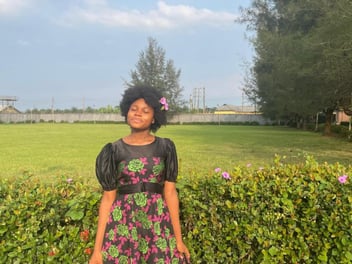
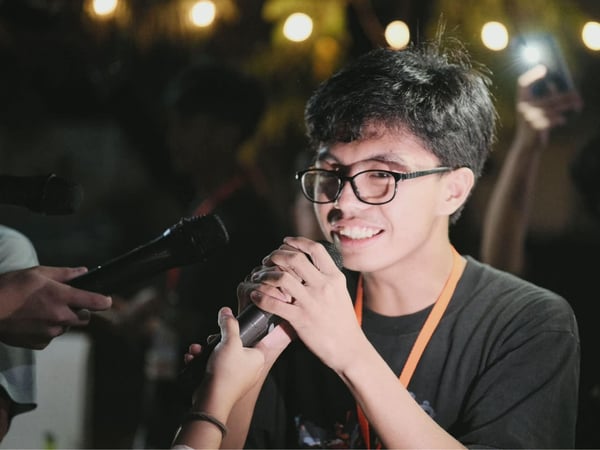
Best Peer Review: Andrew Santillana, age 17, Philippines
Read the winning peer review here!
How do you approach feedback for creative nonfiction as opposed to fiction, knowing that creative nonfiction requires a loyalty to truth that fiction does not?
Creative nonfiction is interesting because, like fiction, the writer must invoke the same dramatic structure of exposition, climax, and denouement. However, in creative nonfiction, the stories mentioned have already occurred. This intrigues me because the writer must convey the emotions of each scenario while being authentic to the story being told. That’s why, when I reviewed MGC1056’s piece, I looked less at the events themselves to construct my critique. Instead, I looked more at the story elements and the literary devices and techniques they used, whether intentionally or subconsciously. That’s what fascinates me about reviewing creative nonfiction; the question for the writer is not necessarily, “Is the plot intriguing?”, although that is essential to the piece. The more central question is: “How do you make the story feel real?” That, in my opinion, is a question more integral to reviewing creative nonfiction.
Guest Judge Tasha Faruqui appreciated your use of the word "ethereal," saying that it "captured the essence of the writing beautifully." How do you find the right vocabulary when celebrating or critiquing a piece?
Here’s something interesting about me: I struggle with common words. For most people, they start with frequent vocabulary, then head over to a thesaurus to find synonyms for more grandeur words. However, for me, I start with a complex word that comes natural to me, then if I feel the need to simplify it, I head over to probably the same thesaurus just to look for a more common word. It’s actually hilarious! Whenever I show my work to my friends and teachers, they always tell me, “Andrew, you need to use more readable words,” or “Please simplify this sentence for more readability.” Yet, more verbose vocabulary such as “melancholic” or “ethereal” just come naturally to me! Personally, it’s a double-edged sword because I would need to spend more time explaining ideas to a less specialized audience, especially if it’s something academic. One thing I've learned the hard way is that, when writing for an audience, you must write on their level of comprehension, not your own. That thought goes both ways. It's okay to use higher-level vocabulary only if it doesn't overwhelm the reader. I’m so glad that Guest Judge Tasha Faruqui appreciated my professional and warm tone in my review because that’s how I want people to perceive me. I’m thankful that she saw the authenticity in my voice and commended my flavor of personality!