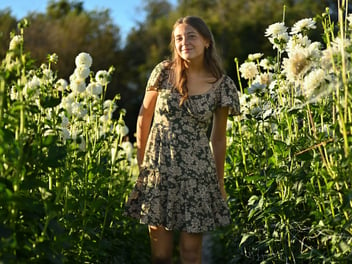

"I honestly never thought of myself as a writer. I’ve always thought of myself as a storyteller—and just as importantly, a listener," said Dr. Tasha Faruqui, Guest Judge for our Memoir Writing Competition. Originally a doctor to an underserved rural community, her daughter, Soraya, was born with a rare genetic disorder, which pivoted her focus to serve as a passionate advocate for parents of medically complex children and those experiencing anticipatory grief.
Read on to learn more about her empowering story and writing advice for memoir writing.

As a doctor with extensive scientific training, when did you first think of yourself as a writer? What role has writing played in your life?
I honestly never thought of myself as a writer. I’ve always thought of myself as a storyteller—and just as importantly, a listener. One of the greatest privileges of being a physician is being invited into people’s lives, to hear their stories, to ask meaningful questions, and to hold what’s shared as something sacred and confidential.
Writing came later. It wasn’t something I set out to do—it was something I grew into. I began to realize that storytelling could be my doorway into writing. Instead of trying to become the kind of writer I thought I was supposed to be, I started by transcribing what I would naturally say out loud. In doing that, I also had to confront my own assumptions about what a “writer” should look like—and let those go.
Your memoir, Keep Your Head Up, shows how you and your family embrace joy and grief at the same time. It's not easy to communicate such a paradox. What choices did you make as an author to illustrate this theme for your readers in a way that felt authentic and true?
To write about joy and grief existing side by side, I had to be willing to go all the way into both—to their fullest. That meant being deeply vulnerable—allowing the full weight of the darkness to be seen. Because without that honesty, the joy wouldn’t feel real. That contrasts what makes the paradox understandable rather than abstract.
It also required me to quiet the internal voices that warned me about judgment or shame. There’s a real temptation to edit your truth to make it more comfortable for others. But I found that the more honest I was, the more authentic the story
Memoirs tend to focus on specific periods in a person’s life. How did you decide which scenes to include in your book?
This was the hardest part of writing the book. There are so many moments, so many memories, and not all of them belong on the page. I had to stay anchored to the central focus of the story and ask myself, over and over: does this scene serve that purpose? If it didn’t deepen the reader’s understanding of the journey, the emotions, or the themes I was trying to convey, I had to let it go—even if it was meaningful to me. In many ways, writing the book wasn’t just about what to include, it was about what I was willing to leave out. Having to put it in an order that a stranger could understand was also a huge challenge.
Your memoir is uniquely structured! Each chapter shares a title with a song that is significant to you. This "mixtape" is a compelling way to draw readers in. What recommendations do you have for writers looking to get creative with how they structure their own memoir writing?
Don’t be afraid to think outside the box when it comes to structure—memoir doesn’t have to follow a traditional format. You may not be able to take every creative liberty you imagine, but it’s worth putting your foot down on the one that matters most to you. For me, that was creating a mixtape—a soundtrack of my life woven through each chapter. Music has always been deeply meaningful to me, and I wanted to preserve that as part of the story I was telling.
What are you looking for in a winning entry? Any tips for our young writers, especially those new to this genre?
I’m looking for a piece where I can clearly hear the writer’s voice—something that feels concise, authentic, and intentional, with a sense of where you’re guiding the reader. Even the most unique stories should carry something universally relatable in the emotions they evoke. I want to feel connected, to recognize something human and familiar within a personal experience.
For young writers, especially those new to memoir, don’t let anyone discourage you by saying memoir doesn’t sell or won’t get published. Your story is worth sharing—period.