
Our Short Story Competition received thousands of powerful entries from all around the world. Guest Judge Megan Tady's picks stood out for their transportive, tender, heartbreaking nature. Now, we've had the chance to interview the winners and learn more about the process behind their winning work.
Check out Tady's commentary on the winning pieces here.
Winner: Dev Chauhan, age 17, India
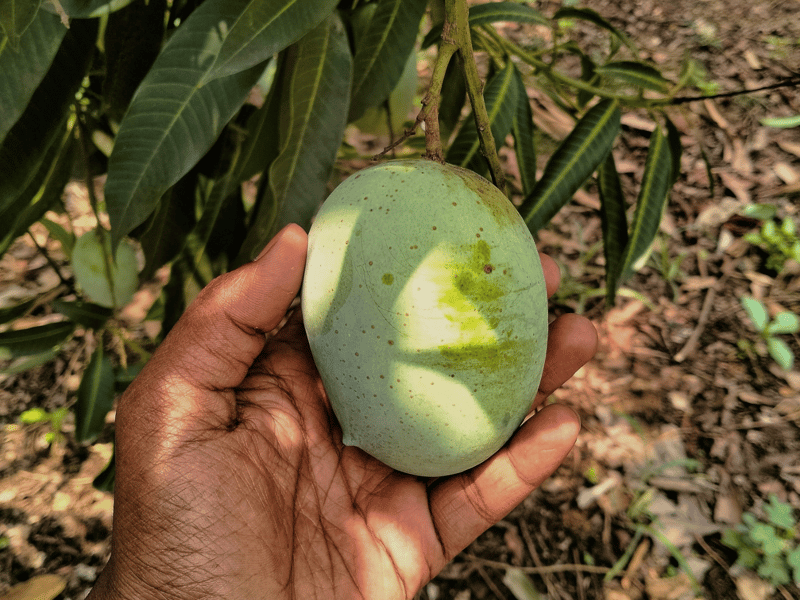
Read the winning piece here!
Throughout your winning piece, the protagonist is characterized by innocence and a beautiful yet devastating childlike naivety. Can you discuss that characterization more deeply? How do you use rhetorical questions to explore those traits?
The narrator has a childlike innocence, but she’s not oblivious to her surroundings in the way her little brother is. She understands hunger, her mother’s favoritism toward Nandu, and the need to gather food for their survival. Despite her harsh reality, the child in her still believes that the small promise she once made with her best friend can be kept. She knows that the mango could stop the rumbling in her stomach, but sharing it with Rukhsana not only keeps their promise but also provides her an escape from her current life. This is what makes her innocence beautiful. It is devastating because the reader already knows that the promise will be broken, but she continues to believe that their small world can stay intact despite everything around them. Even when Rukhsana leaves in the boat, she tells herself that they can still share the mango when she returns, which is her way of refusing to consider the fact that their friendship might have ended.
The rhetorical questions show her trying to make sense of the adult world. When she asks why Rukhsana’s mother sold their thatch despite the approaching rains, she is forcing an adult decision to appear logical to a child’s mind. Later, when the boat leaves, she wonders what could have Rukhsana taken with her. This is her attempt to invent a continuity that no longer exists. I deliberately left these questions unanswered. The girl simply doesn’t have the answers to her own questions, but the reader does. This gap does the work that direct explanation never could.
Guest Judge Megan Tady celebrated your “remarkable achievement to convey so much emotion with such restraint.” What was the first short story you ever wrote? What advice do you have for other young writers attempting this genre?
My first-ever story was an over-explained horror piece. I had described every emotion in detail, fearing the reader might miss the feeling I wished to convey. I was essentially telling the reader to feel something through lines like “she was sad” instead of making them feel it themselves.
My main advice to other writers would be to trust your readers. They understand more than you think they do. You do not need to describe every emotion. If the physical details are sharp enough, the feeling arrives on its own. End the story as soon as the final action is complete. You might feel the urge to add one extra sentence explaining what just happened. Don’t! I could have ended my story with the narrator lamenting the loss of her friend, but that would have completely destroyed the emotional weight of the piece. Sometimes less is more.
Runner-Up: Alina Chitalwala, age 14, India

Read the runner-up piece here!
Your wonderful, humorous piece is narrated by an unexpected voice: a pet cat. How did you approach the task of assigning identity to a creature whose view of the world us humans can’t entirely understand?
I imagined the cat as a toddler, giving him a similar mindset and a limited understanding of the world around him. I wanted him to interpret events through his own little world, without fully understanding the complexities behind them. After all, animals experience the world differently from humans, and I wanted to explore that difference in perception.
This also allowed me to create a contrast between what the cat understands and what the reader can recognize. While the cat might interpret a situation in a simple or even humorous way, the reader can perceive the deeper emotions underlying it. I think this contrast is what allowed me to balance humor with heartbreak without making the cat's perspective feel unnatural. Giving readers the freedom to interpret the scenes for themselves and recognize the sad truth beneath the naive humor was a deliberate choice. I wanted them to discover the emotional depth of the story on their own, rather than have the cat explain emotions he couldn't fully comprehend. It was a challenging decision, but one I believe was well worth it.
“The use of repetition…is a clever narrative device that provides structure and builds a growing sense of dread,” said Guest Judge Megan Tady. How do you work towards the devastating, poignant ending of your piece? Did you always know that’s how the piece would end?
I didn't begin writing with the entire story mapped out. In fact, I only realised halfway through that this was the story I wanted to tell. Once I discovered the direction I wanted to take it in, I began working towards an ending that would feel emotionally meaningful without being forced.
The repetition was a deliberate choice. I wanted to establish a sense of routine, something familiar and almost mundane, that would gradually acquire a different meaning as the story progressed. The idea was that details which initially seemed insignificant would become more poignant in retrospect, allowing the ending to change how the reader perceived what came before it.
I think repetition also helped me build towards the ending without making the emotional weight too obvious too early. I wanted the reader to experience the story naturally, rather than feel as though they were being guided towards a particular emotional response.
Best Peer Review: Carmen Ng, age 15, Australia

Read the winning peer review here!
Guest Judge Megan Tady celebrated your “actionable suggestions.” How do you balance practical feedback that is still realistic and aligned with the writer’s voice?
I love editing, and when reading through a piece I tend to focus on two main areas of feedback: the story itself - asking the writer questions that might add depth and complexity to the plot and characters - and the writing - identifying areas that can be clarified or adjusted for fluency, correcting grammatical or punctuation errors, and suggesting other changes that can make the story more immersive for the reader. Many of the 'writing' suggestions are broadly applicable regardless of the writer's style, though of course it is entirely up to them whether or not they decide to implement the changes. Since the 'story' suggestions are more subjective, I try to phrase them as questions to encourage the writer to explore new possibilities whilst giving them room to adapt ideas to suit their own voice, sometimes offering suggestions of my own for inspiration.
I always try to provide feedback that I would find helpful if I were the writer, balancing ideas for adding information with opportunities to make things more concise (because I know what it's like to struggle with word counts!), and being specific but open-ended with my feedback. I find that this helps me keep my suggestions realistic and relatively easy to execute, whilst still giving the writer the freedom to decide how best to implement the feedback.
Why do you think peer reviews are important? Have you ever received writing advice that influenced you as a reader and/or writer?
I think that peer reviews are important because often you spend a long time working on a piece and it's difficult to see things from another perspective. Peer reviews are a wonderfully supportive way of seeing what others think of your work, and you can discover new things not just about your piece, but also about your writing style. When a fresh pair of eyes looks over your piece, they can pick up on things you've missed, offer fresh insights, and help you recognise both the strengths and weaknesses in your work. Sometimes, I find that what seems clear to me as the writer isn't as clear to the reader, and that's another important aspect of sharing your work - what the reader interprets may be different to what the writer envisioned, for better or for worse.
Writing peer reviews is a similarly valuable experience. Not only is it enjoyable to read someone else's work and contribute to their creative process, hopefully making a positive difference, but the critical thinking involved can also be applied to your own writing and help you think more deeply about your own pieces.
Some of the best writing advice I've received that has influenced me as a writer is to think carefully about absolutely every word you write. Does it really have to be there? What does it add? Is it the best word for the job? I received this writing advice in relation to poetry, but I think it's applicable to almost every form of writing, especially short stories like these. Make every word count!
Our next monthly writing competition is now open! Enter here.


